


Reading Time: 17 mins
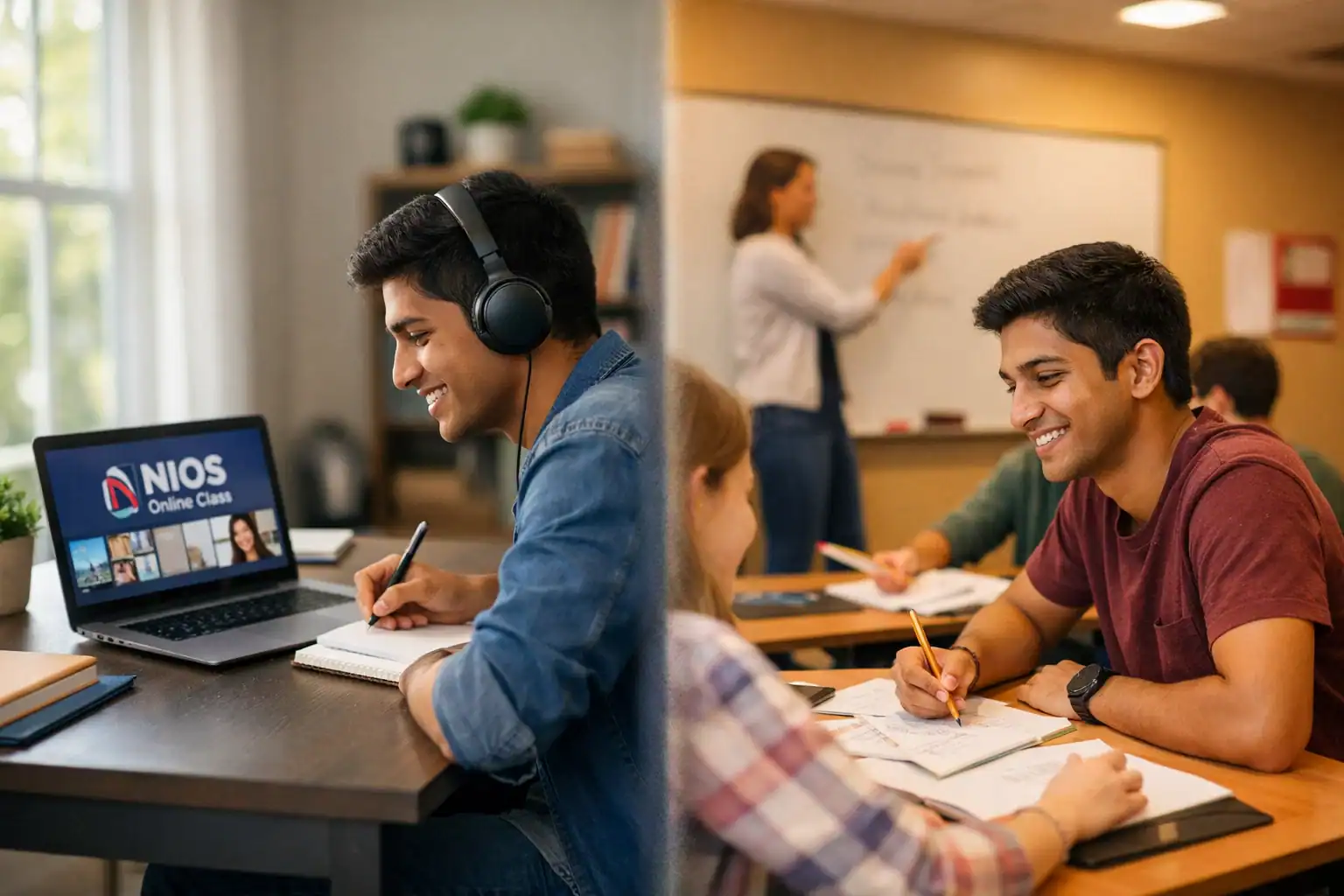
Choosing between online and offline NIOS coaching keeps you awake at night because your entire academic future depends on this single decision. You’ve invested time researching options, reading reviews, and comparing institutes, yet confusion persists. Making the wrong choice could mean wasted money, poor exam results, and months of frustration trying to grasp concepts through an incompatible learning format that doesn’t match your needs.
This critical decision becomes even more stressful when friends succeed through one mode while family members recommend another. You’re paralyzed between convenience and effectiveness, wondering if online learning provides adequate support or if offline classes truly justify their higher costs and time commitments. The pressure mounts as enrollment deadlines approach while clarity remains elusive.
The solution lies in understanding your personal learning style, circumstances, and goals rather than following generic advice. This comprehensive guide dissects both coaching modes through practical comparisons, revealing exactly which format suits your specific situation. By understanding real differences beyond marketing claims, you’ll make confident decisions aligning with your authentic needs and maximizing your NIOS exam success probability.
NIOS coaching operates fundamentally differently from conventional school education, requiring specialized training approaches whether delivered online or offline. Understanding these unique characteristics helps you evaluate which delivery mode serves your needs better.
The National Institute of Open Schooling emphasizes self-directed learning where students take primary responsibility for their educational progress. Unlike traditional classrooms with daily attendance and continuous teacher supervision, NIOS learners work independently through comprehensive study materials, appearing for examinations when adequately prepared.
This autonomy creates unique coaching requirements:
Students need structured guidance navigating self-study materials effectively rather than spoon-fed information delivery. Quality NIOS coaching provides roadmaps, clarifies difficult concepts, and ensures comprehensive syllabus coverage without creating dependency.
Understanding the NIOS grading system becomes crucial for strategic preparation. Coaches help students optimize their efforts across theory examinations, practicals, and assignments, maximizing overall grade outcomes.
Time management skills prove essential for NIOS success. Coaching programs teach students how to create realistic study schedules, maintain consistency, and balance preparation across multiple subjects without external enforcement.
Examination strategies differ significantly from traditional board exams. Learning how to clear NIOS exams in first attempt requires understanding question patterns, answer writing techniques, and strategic subject prioritization that specialized coaching provides.
Both online and offline NIOS coaching aim to develop these competencies, but their delivery mechanisms create distinct learning experiences with unique advantages and limitations affecting different student types variably.
Online NIOS coaching leverages digital technology creating virtual learning environments accessible from anywhere with internet connectivity. This mode has evolved significantly beyond simple video watching, incorporating interactive elements that engage students meaningfully.
Core Components of Online NIOS Coaching:
Live interactive classes conducted through video conferencing platforms allow real-time teacher-student interaction. Students ask questions, participate in discussions, and receive immediate clarification just like physical classrooms, eliminating the isolation of passive video consumption.
Recorded lecture libraries provide flexible learning where students review complex concepts multiple times at their own pace. This on-demand access proves invaluable when students need concept reinforcement or miss live sessions due to personal commitments.
Digital study materials including e-books, PDF notes, practice question banks, and previous year papers remain accessible 24/7 through learning management systems. Students download resources, annotate digitally, and organize materials according to personal preferences.
Online doubt-clearing sessions through dedicated forums, chat support, or scheduled one-on-one video calls ensure students never struggle alone with difficult concepts. Quick response times prevent small confusions from becoming major knowledge gaps.
Regular online assessments through mock tests, quizzes, and assignments provide continuous performance feedback. Automated grading systems generate instant results with detailed analytics identifying strengths and improvement areas.
Interactive whiteboards during live sessions enable teachers to explain concepts visually, solve problems step-by-step, and engage students actively rather than delivering monotonous lectures.
Technology Infrastructure:
Students need reliable internet connections, laptops or tablets with webcams and microphones, and basic digital literacy navigating learning platforms. Most institutes provide comprehensive technical support helping students troubleshoot common issues.
Offline NIOS coaching through physical classroom instruction offers distinct advantages that many students find irreplaceable despite technological advancement. Understanding these benefits helps you evaluate whether traditional learning formats suit your needs.
Face-to-Face Interaction Quality:
Direct physical presence of teachers creates connection quality that video screens struggle to replicate. Non-verbal communication including body language, facial expressions, and energy levels convey meaning beyond words, enhancing understanding and engagement.
Immediate personal attention when students struggle with concepts happens naturally in physical classrooms. Teachers notice confused expressions, hesitation, or frustration instantly, providing timely intervention before students disengage completely.
Structured Learning Environment:
Physical classrooms provide dedicated learning spaces free from home distractions like family members, television, social media, or household responsibilities. This focused environment increases concentration and information retention significantly.
Fixed class schedules create external accountability that self-discipline alone cannot match. Committed students attend regularly, building consistent study habits and maintaining momentum throughout course duration.
Peer learning opportunities through group discussions, collaborative problem-solving, and informal knowledge sharing enrich understanding beyond teacher instruction. Students learn from classmates’ questions, perspectives, and explanation approaches.
Hands-On Practical Support:
For subjects requiring practical work, physical labs with equipment and teacher supervision provide essential hands-on experience impossible to replicate virtually. Direct teacher guidance during experiments ensures proper technique and safety.
Physical study materials including printed notes, reference books, and assignment sheets create tangible learning resources. Many students retain information better when reading physical books compared to screens.
Immediate Clarification:
Questions arising during explanations receive instant answers without technological delays or communication barriers. This immediate feedback loop accelerates learning and prevents confusion accumulation.
Teachers assess understanding through observation, adjusting teaching pace and depth according to class response. This dynamic adaptation ensures optimal learning for the group’s collective level.
Flexibility represents NIOS’s core value proposition, attracting students who need alternatives to rigid traditional schooling. However, online and offline coaching modes offer dramatically different flexibility levels affecting your daily life substantially.
Schedule Flexibility Comparison:
Online coaching provides unmatched scheduling freedom with recorded lectures accessible anytime, allowing students to learn during hours matching their peak productivity. Night owls study late evening, while early risers engage with content at dawn.
Students traveling frequently for work, sports, or family commitments continue learning seamlessly from any location with internet access. Geographic mobility doesn’t interrupt educational progress or create knowledge gaps.
Offline classes require physical presence at specific times and locations, creating scheduling constraints. Students must arrange other commitments around fixed class timings, limiting flexibility for those with irregular schedules.
Learning Pace Control:
Online platforms enable students to pause, rewind, and replay complex explanations until completely understood. Slower learners review content multiple times without embarrassment, while faster learners accelerate through familiar material.
Offline classes proceed at group pace determined by average student comprehension. Individual learning speeds receive less accommodation unless classes are extremely small with dedicated attention.
Work-Life Integration:
Working professionals find online NIOS coaching convenient as they can attend live sessions during lunch breaks or watch recordings post-work. Education integrates into busy lives without requiring career sacrifices.
Offline classes typically occur during business hours or early evenings, creating conflicts for full-time employees. Some students must request time off or sacrifice income attending daytime sessions.
Family Responsibility Balance:
Parents managing childcare, individuals caring for elderly relatives, or students with family businesses benefit from online learning’s location independence. They fulfill responsibilities while pursuing education.
Offline attendance becomes challenging when family emergencies arise or dependents need supervision. Physical presence requirements create guilt and stress balancing family needs with educational commitments.
Flexibility for Special Circumstances:
Students with health challenges, disabilities affecting mobility, or recovering from injuries access online coaching without physical strain. Learning continues uninterrupted regardless of physical condition.
Offline classes may pose accessibility challenges for students with certain disabilities unless institutes provide specific accommodations. Commuting with physical limitations adds fatigue and reduces learning efficiency.
Financial investment significantly influences coaching mode selection, particularly for families with budget constraints or students self-funding their education. Comprehensive cost analysis reveals substantial differences beyond basic tuition fees.
Direct Tuition Fees:
Online NIOS coaching typically charges 30-50% lower fees compared to offline programs due to reduced overhead costs. Without physical infrastructure expenses, institutes pass savings to students through competitive pricing.
Offline coaching bears costs for classroom rentals, utilities, furniture, and facility maintenance reflected in higher tuition fees. Premium locations with excellent accessibility command premium pricing.
Transportation Expenses:
Online learning eliminates daily commuting costs including fuel, public transportation fares, or ride-sharing services. These savings accumulate significantly over several months of course duration.
Time Opportunity Costs:
Online students save 1-3 hours daily otherwise spent commuting, allowing this time for additional study, work, or personal activities. Time savings translate to economic value through increased productivity or earning potential.
Offline attendance consumes significant time traveling to and from coaching centers. For working professionals, this time loss equals reduced work hours and potentially lower income.
Study Material Costs:
Digital learning platforms provide materials electronically, eliminating printing and binding expenses. Students access unlimited resources without physical storage space requirements.
Offline coaching may charge separately for printed notes, reference materials, and practice papers.
Technology Investment:
Online coaching requires initial technology investment including laptops or tablets, stable internet connections, and possibly headphones or webcams.
However, most students already own necessary devices for personal use, making incremental investment minimal. Internet costs exist regardless of coaching mode as connectivity remains essential for modern life.
Hidden Costs Comparison:
Offline learning involves indirect expenses like meals during long coaching sessions, stationery purchases, and occasional group study meetup costs. These small amounts accumulate unexpectedly.
Online learning’s primary hidden cost involves potential technical troubleshooting or equipment repairs. However, these remain generally lower than offline hidden expenses.
Academic performance ultimately determines coaching effectiveness regardless of delivery mode. Examining which format produces better examination results helps make evidence-based decisions.
Success Rate Analysis:
Research comparing online and offline NIOS student performance shows minimal difference in outcomes when controlling for student motivation and engagement levels. Teaching quality and student commitment matter far more than delivery mode.
Top-performing students excel in both formats by maintaining discipline, utilizing available resources fully, and seeking help when struggling. Similarly, disengaged students underperform regardless of whether instruction occurs physically or virtually.
Learning Retention Comparison:
Studies suggest active learning techniques improve retention more than passive lecture consumption in both modes. Students taking notes, solving problems, and testing themselves regularly remember content better than those merely attending classes.
Online students who watch recordings passively without engagement show lower retention than those actively participating in live sessions and completing assignments. Similarly, offline students merely attending without active involvement show poor outcomes.
Personalized Attention Impact:
Smaller online batches with dedicated doubt-clearing sessions provide individualized attention rivaling or exceeding large offline classrooms. Technology enables targeted feedback and personalized learning paths impossible in large physical groups.
However, offline coaching with small student-teacher ratios offers unmatched personal connection. Teachers knowing students personally provide tailored guidance, motivation, and support enhancing performance significantly.
Subject-Specific Considerations:
Theoretical subjects like business studies, political science, or history work excellently in online formats. Conceptual understanding develops effectively through video lectures, reading materials, and online discussions.
Practical subjects require hands-on experience. While online coaching simulates experiments through videos, physical laboratory work under direct supervision provides superior learning for science practicals.
Mathematics and quantitative subjects benefit from interactive problem-solving regardless of mode. Both formats work well when teaching emphasizes practice and application over rote formula memorization.
Assessment and Feedback Quality:
Online platforms generate detailed performance analytics tracking progress across topics, question types, and difficulty levels. Data-driven insights help students focus revision strategically on weak areas.
Offline assessment provides immediate face-to-face feedback where teachers explain mistakes personally, demonstrate correct approaches, and ensure understanding before moving forward.
Understanding technical prerequisites prevents frustration and ensures smooth online learning experiences. Inadequate technology creates unnecessary barriers undermining educational effectiveness.
Essential Hardware:
Laptops with minimum 4GB RAM and recent processors handle video conferencing, document viewing, and web browsing simultaneously. While older computers work for basic tasks, they struggle with multiple applications causing frustration.
Tablets work adequately for content consumption and note-taking but limit multitasking compared to laptops. Students frequently switching between materials, reference documents, and video sessions benefit from larger laptop screens.
Smartphones serve as backup devices for emergency class attendance but provide suboptimal experiences for regular learning. Small screens strain eyes during extended sessions and limit detailed content viewing.
Reliable webcams and microphones enable active class participation. Built-in device cameras usually suffice, though external options provide superior quality for students wanting enhanced interaction.
Internet Connectivity:
Stable internet connections with minimum 5 Mbps speeds ensure smooth video streaming without buffering interruptions. Connections below this threshold create frustrating disruptions damaging learning continuity.
Unlimited data plans or high data allowances accommodate video content consumption which uses significant bandwidth. Students with limited data caps may exhaust allowances quickly requiring costly top-ups.
Backup internet options like mobile hotspots prevent complete disruption when primary connections fail. Having alternatives ensures continuity during internet outages or technical issues.
Software and Platforms:
Zoom, Google Meet, or Microsoft Teams facilitate live classes. Students must install these applications and understand basic functions like muting, screen sharing, and breakout rooms.
Learning Management Systems (LMS) host study materials, assignments, and assessments. Familiarity with platform navigation, file downloads, and assignment submissions ensures smooth academic progress.
PDF readers, document editors, and note-taking applications enable effective study. Free options like Adobe Reader and Google Docs provide necessary functionality without additional investment.
Technical Skills:
Basic computer literacy including file management, application installation, and troubleshooting common issues prevents minor problems from disrupting learning. Students lacking these skills may need preliminary training.
Online communication etiquette like maintaining professional appearance during video calls, using chat appropriately, and respecting digital classroom norms ensures effective learning environment.
Human connection significantly impacts learning experiences, motivation, and emotional wellbeing. Understanding social dynamics in both coaching modes helps evaluate their holistic impact beyond pure academic outcomes.
Peer Networking Opportunities:
Offline classes naturally facilitate friendships through daily physical interactions, informal conversations before and after sessions, and collaborative study groups. These relationships provide emotional support, motivation, and lasting connections.
Students form study partnerships, share notes, explain concepts to each other, and motivate peers during challenging periods. This peer ecosystem creates collective momentum pushing everyone toward success.
Online platforms offer virtual interaction through discussion forums, group chats, and video breakout rooms. While meaningful connections form, they require conscious effort compared to spontaneous offline friendships.
Virtual study groups using video calls or collaborative platforms enable peer learning remotely. However, organizing and maintaining these groups demands higher initiative than naturally forming offline groups.
Teacher-Student Relationship Building:
Physical presence creates rapport through casual conversations, personal encouragement, and human connection beyond academic content. Students feel comfortable approaching teachers for guidance extending beyond syllabus-related queries.
Teachers knowing students personally provide customized advice, recognize individual struggles early, and offer emotional support during stressful periods. This mentorship dimension significantly impacts student confidence and persistence.
Online teaching requires intentional relationship building through personalized messages, individual attention during sessions, and dedicated communication channels. Effective online teachers invest extra effort maintaining connection despite physical distance.
Collaborative Learning Experiences:
Offline group projects, peer teaching sessions, and classroom discussions create dynamic learning environments where students learn from multiple perspectives. Spontaneous questions and discussions enrich understanding beyond prepared materials.
Online collaboration tools enable group work through shared documents, virtual whiteboards, and video conferencing. While functional, these require more coordination and lack spontaneity of physical collaboration.
Motivation and Accountability:
Seeing peers consistently attending and preparing motivates students maintaining their commitment. Physical presence of serious learners creates aspirational environment encouraging excellence.
Online learning requires stronger self-motivation as virtual attendance lacks the same social pressure. Students must consciously maintain discipline without physical peer influence.
Reducing Isolation:
Students choosing NIOS often feel isolated from mainstream education. Offline coaching centers create communities where learners share similar circumstances, reducing feelings of being different or left behind.
Online communities serve similar functions virtually but require active participation in forums and group activities. Passive learners may feel disconnected without intentional community engagement.
Individual characteristics, circumstances, and learning preferences dramatically influence which coaching mode delivers optimal results. Understanding your profile helps make personalized decisions rather than following generic recommendations.
Working Professionals:
Online coaching obviously suits employees balancing jobs with education. Flexible scheduling, recorded lectures, and location independence enable learning around work commitments without career sacrifices.
Professionals with unpredictable schedules, frequent travel, or shift work particularly benefit from on-demand content access. Education integrates seamlessly into their existing routines.
Full-Time Students:
Young learners with no employment may benefit more from offline coaching’s structure and discipline. Fixed schedules build consistent habits while peer interaction provides motivation and social development.
However, self-disciplined full-time students excel online, appreciating flexibility to optimize learning schedules around personal productivity patterns rather than arbitrary timing.
Athletes and Performers:
Individuals with intensive training schedules, competitions, or performances requiring travel need online coaching’s flexibility. They can maintain education despite irregular routines and geographic mobility.
However, some athletes prefer offline coaching during off-season periods, utilizing structured environment for focused academic progress between training cycles.
Students with Learning Differences:
Learners with attention difficulties may struggle with online formats lacking external structure and physical accountability. Offline classes provide environmental cues and social pressure maintaining focus.
Conversely, students with social anxiety or sensory sensitivities often thrive online, learning comfortably from familiar home environments without overwhelming classroom stimuli.
Parents and Caregivers:
Individuals managing childcare or elder care responsibilities need online coaching’s location flexibility. They study while remaining available for dependents, fulfilling multiple responsibilities simultaneously.
Different Age Groups:
Adult learners resuming education after gaps typically appreciate online convenience fitting education around established life routines. They possess maturity for self-directed learning without external enforcement.
Younger students may need offline structure developing discipline and study habits. Physical environment separates learning from leisure, creating mental boundaries that young learners benefit from.
Technology Comfort Levels:
Tech-savvy students navigate online platforms effortlessly, maximizing available features and troubleshooting minor issues independently. They appreciate digital learning tools enhancing their educational experiences.
Students uncomfortable with technology face frustration in online environments. Technical difficulties distract from learning, creating negative associations. These learners prefer offline simplicity focusing purely on content.
Examining actual performance data across both coaching modes reveals important insights beyond theoretical advantages and marketing claims. Real success rates guide evidence-based decision making.
Comparative Performance Data:
Institutes offering both online and offline coaching typically report similar pass rates across formats when controlling for student demographics and commitment levels. Delivery mode matters less than teaching quality and student engagement.
Subject-specific variations appear where practical components dominate. Science students in offline coaching with laboratory access score slightly higher in practicals compared to purely online learners.
Completion Rate Analysis:
Online courses show higher dropout rates as students underestimate self-discipline requirements. Without external accountability, some students procrastinate indefinitely despite good intentions.
Offline coaching demonstrates better course completion as physical attendance creates momentum and social commitment. Students feel obligated to peers and teachers, pushing through difficult periods.
Grade Distribution Patterns:
Top performers achieve distinctions in both modes through exceptional dedication regardless of format. These students would succeed in any environment due to intrinsic motivation and strong work ethic.
Average students show modest performance variations favoring formats matching their learning preferences. Those valuing flexibility excel online while structure-seekers perform better offline.
Long-Term Academic Progression:
Following students into higher education reveals that learning modes impact subsequent academic success minimally. College performance depends more on foundational knowledge quality than whether coaching occurred virtually or physically.
However, self-directed learning skills developed through online education sometimes provide advantages in university settings requiring independent study and research.
Skills Development Beyond Academics:
Online learning develops technological proficiency, self-management, and independent learning capabilities valuable in modern workplaces. These metacognitive skills extend beyond immediate examination success.
Offline coaching builds interpersonal skills, teamwork capabilities, and face-to-face communication comfort through regular physical interaction. These social skills prove essential in many career paths.
Subject-Specific Success Patterns:
Mathematics and quantitative subjects show equivalent success across modes when adequate practice opportunities exist. Problem-solving skills develop through repetition regardless of instruction format.
Language subjects benefit from interactive discussions available in both live online sessions and physical classes. Pure reading-based online learning shows lower effectiveness than interactive formats.
Science practicals require hands-on experience ideally delivered offline. However, well-designed online programs with at-home experiment kits or intensive weekend practical sessions achieve comparable outcomes.
Choosing between online and offline NIOS coaching ultimately depends on your unique circumstances rather than one format’s inherent superiority over another. Both modes deliver excellent results when matched correctly with learner profiles, preferences, and situations.
Online coaching excels for working professionals, frequent travelers, students with irregular schedules, individuals managing family responsibilities, and self-motivated learners valuing flexibility and convenience. Its cost-effectiveness and location independence make quality education accessible to broader populations.
Offline coaching serves students needing external structure, those valuing face-to-face interaction, learners from subjects with significant practical components, individuals uncomfortable with technology, and those seeking strong peer communities and direct teacher relationships.
Many successful students adopt hybrid approaches, combining online resources for flexibility with periodic offline doubt-clearing sessions or intensive workshops. This balanced strategy captures advantages from both formats while mitigating limitations.
Rather than asking which mode is objectively better, ask which mode better serves your specific learning style, current life situation, and educational goals. Honest self-assessment guides optimal decisions producing desired academic outcomes.
Take Your Next Step:
Start your NIOS enrollment journey today with confidence knowing you’ve made an informed decision aligned with your authentic needs.
For comprehensive information about NIOS programs, explore our knowledge base covering everything from admission procedures to examination strategies.
Understanding differences between NIOS and CBSE syllabus helps set realistic expectations about course content and preparation requirements.
Your education transforms your future. Choose wisely, commit fully, and succeed confidently in your NIOS examinations regardless of coaching format.
Yes, many institutes allow format switches if circumstances change. However, switching may involve administrative processes, possible fee adjustments, and coordination to ensure continuity. Discuss flexibility policies with your institute before enrolling to understand available options during your course duration.
No. Your NIOS certificate doesn’t indicate whether you attended online or offline coaching. Universities and employers evaluate your educational credentials and examination results, not the coaching format you utilized. Both modes lead to identical certifications with equal recognition and acceptance.
Online learning requires stronger self-motivation than offline alternatives. Students lacking self-discipline often struggle with online formats unless they implement strict personal schedules, use accountability tools, or enlist family support maintaining consistency. Consider offline coaching if external structure significantly impacts your performance.
NIOS practical examinations occur at designated centers regardless of coaching mode. Online students attend physical practical exams just like offline students. Quality online coaching provides theoretical preparation, video demonstrations, and sometimes optional intensive practical workshops before examinations to ensure readiness.
This depends on individual institutes’ policies. Some progressive offline coaching centers provide complementary recorded lectures as backup resources, while others keep recordings exclusive to online programs. Clarify recording access during enrollment if this matters for your learning approach and revision strategy.
Both formats prepare students effectively for competitive examinations when coaching includes targeted preparation strategies. Success depends more on practice intensity, problem-solving focus, and time management than delivery format. NIOS acceptance by JEE and NEET ensures equal eligibility regardless of coaching mode chosen.
While most subjects work well in both formats, science practicals benefit significantly from hands-on laboratory experience under direct supervision. However, even practical subjects can be learned online through demonstration videos, at-home experiments, and intensive practical sessions before examinations. Your comfort with self-directed practical learning determines whether offline proves necessary.
Completion speed depends primarily on your study pace, not coaching format. Online coaching often enables faster completion through flexible scheduling and on-demand content access allowing intensive study periods. However, motivated students complete quickly in offline settings too. Average time required to complete NIOS courses varies based on individual circumstances rather than coaching mode.