
Reading Time: 18 mins
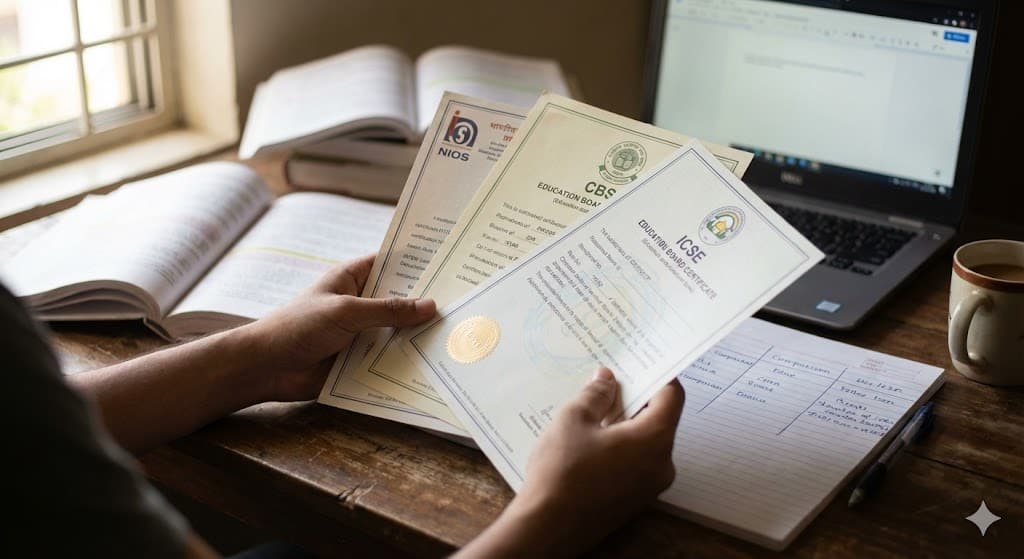
Choosing between education boards feels overwhelming when your academic future hangs in the balance. Every year, thousands of students struggle with this decision, often selecting the wrong board based on incomplete information or peer pressure. This mistake can lead to poor academic performance, increased stress, and limited career opportunities that could have been avoided.
The solution? Understanding exactly how NIOS compares to traditional education boards like CBSE, ICSE, and State Boards. This comprehensive guide reveals the critical differences, helping you make an informed choice that aligns with your learning style, career goals, and personal circumstances.
India’s education system operates through multiple recognized boards, each offering distinct advantages and serving different student populations. The major education boards include:
Central Board of Secondary Education (CBSE) operates under the central government, providing standardized education across India with over 27,000 affiliated schools. Known for its structured curriculum and national-level competitive exam preparation, CBSE remains the most popular choice for traditional schooling.
Indian Certificate of Secondary Education (ICSE) focuses on comprehensive learning with detailed syllabi across all subjects. Managed by the Council for the Indian School Certificate Examinations, ICSE emphasizes analytical thinking and application-based knowledge, particularly strong in English language proficiency.
State Boards function under individual state governments, offering region-specific curricula in local languages. These boards cater to students preferring education in their mother tongue, with content aligned to state-level entrance examinations.
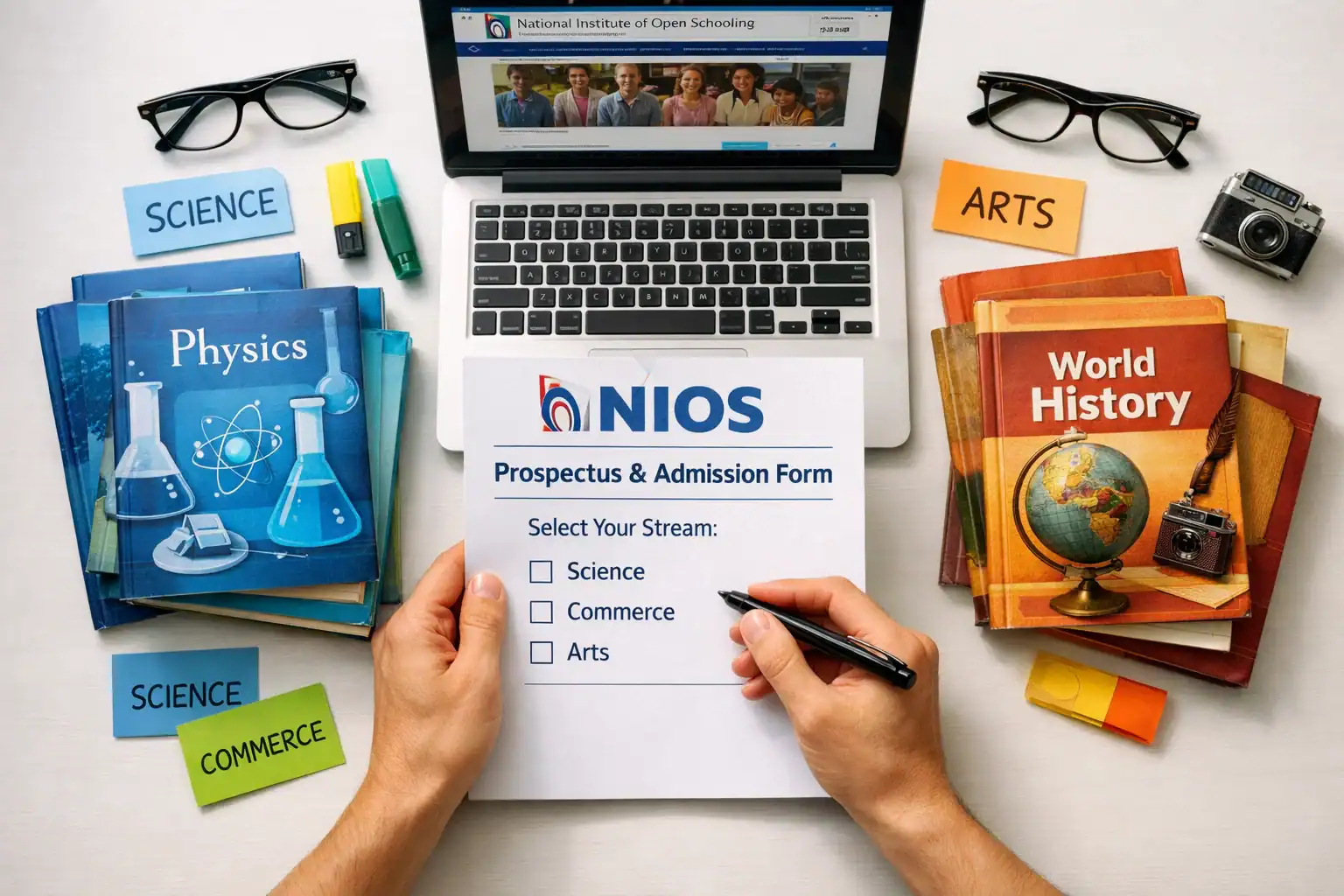
National Institute of Open Schooling (NIOS) provides flexible, self-paced learning alternatives for students who need alternative educational pathways. As the world’s largest open schooling system, NIOS serves over 500,000 learners annually across secondary and senior secondary levels.
Understanding your learning preferences, career aspirations, and personal circumstances becomes essential when evaluating these boards. Each system offers unique benefits designed for specific student profiles and educational requirements.
The National Institute of Open Schooling revolutionizes traditional education by offering unmatched flexibility and accessibility. Established in 1989 under the Ministry of Education, NIOS provides open basic education, secondary education, and senior secondary education programs recognized by all Indian universities and government organizations.
Key Features of NIOS:
NIOS operates through a credit-based system allowing students to complete their education at their own pace. Learners can choose from over 40 subjects across academic and vocational streams, creating customized educational pathways aligned with their interests and career goals.
The board offers multiple examination opportunities throughout the year through both public examinations and on-demand assessments. This flexibility eliminates the pressure of single annual exams, allowing students to appear when adequately prepared.
Target Learner Groups:
NIOS specifically caters to working professionals balancing education with employment commitments. Athletes and performing artists who require flexible schedules due to training and competitions find NIOS particularly beneficial.
Students who previously dropped out of formal education can resume their learning journey through NIOS without age restrictions. Homeschoolers seeking accredited certification while maintaining personalized learning environments also benefit from NIOS programs.
Learners with special needs receive tailored support through NIOS’s inclusive education initiatives. The board provides study materials in multiple formats and allows extra time during examinations when required.
The open schooling model emphasizes learner autonomy, self-directed study, and practical knowledge application. This approach develops crucial skills like time management, self-discipline, and independent problem-solving abilities valued in modern workplaces.
The comparison between NIOS and CBSE reveals fundamental differences in educational philosophy, delivery methods, and student experience. Both boards maintain government recognition, yet they serve distinctly different educational needs.
Curriculum Structure and Flexibility
CBSE follows a fixed curriculum with predetermined subjects for each stream. Students must complete specific subject combinations like Physics, Chemistry, Mathematics for science stream or History, Political Science, Economics for humanities stream.
NIOS allows complete subject customization, enabling students to combine subjects across different streams. This flexibility in subject selection lets learners create unique academic profiles matching their career aspirations and personal strengths.
Attendance and Learning Mode
CBSE requires mandatory daily attendance at affiliated schools, with strict minimum attendance percentages (typically 75%) for exam eligibility. Students follow fixed class schedules, uniform academic calendars, and institutional timetables.
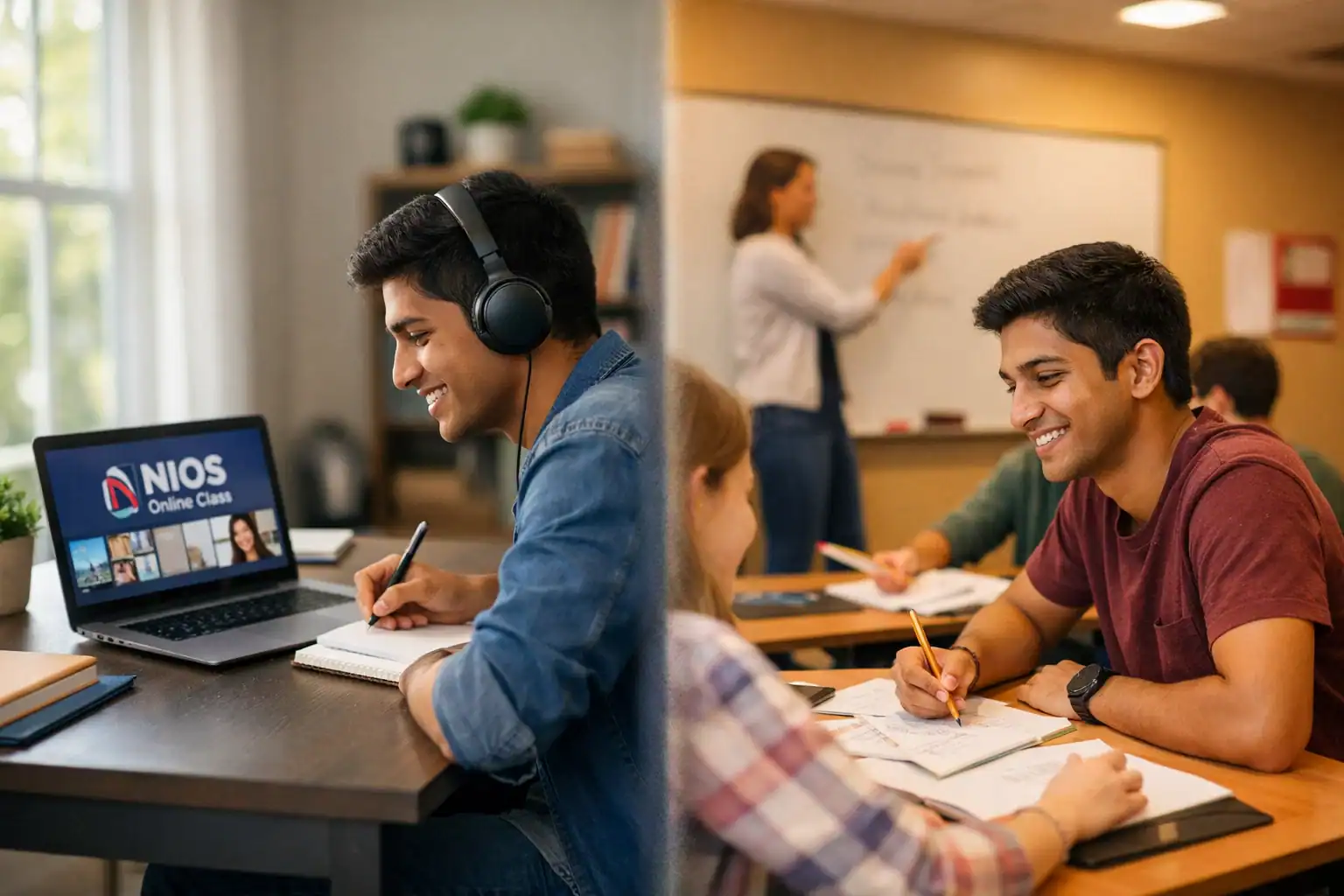
NIOS operates without mandatory class attendance requirements. Students access learning materials through study centers, online resources, and self-learning modules. This independence suits learners who thrive in self-directed environments or have scheduling constraints preventing regular school attendance.
Examination System
CBSE conducts annual examinations in February-March, with supplementary exams in July-August for failed candidates. The single exam window creates significant pressure, as students get limited opportunities to demonstrate their knowledge.
NIOS offers multiple exam cycles throughout the year – public examinations in April-May and October-November, plus on-demand exams available throughout the year. Students can attempt examinations when ready, reducing exam anxiety and improving performance outcomes.
Assessment Methods
Both boards use similar evaluation patterns with theory examinations, practical assessments for science subjects, and internal assessments. However, NIOS assignment evaluation provides continuous assessment opportunities, contributing to final grades.
Recognition and Acceptance
CBSE enjoys widespread recognition across educational institutions, with most colleges and universities readily accepting CBSE certificates. The board’s standardized curriculum makes credit transfer and institutional admissions straightforward.
NIOS certificates carry equal validity for higher education and government employment. However, some private institutions may have limited awareness about NIOS, requiring students to educate admission officers about their accreditation status.
Cost Comparison
CBSE education typically involves higher costs due to school fees, transportation, uniforms, and additional educational expenses. Private CBSE schools can charge substantial annual fees ranging from ₹50,000 to several lakhs.
NIOS maintains significantly lower fee structures, with total costs for secondary or senior secondary programs ranging from ₹3,000 to ₹10,000 including examination fees. This affordability makes quality education accessible to economically disadvantaged learners.
Academic Rigor and Difficulty
Many students wonder whether NIOS is harder than CBSE. The difficulty level depends on learning style and preparation approach. NIOS requires strong self-discipline and independent study skills, while CBSE provides structured guidance through regular classroom instruction.
The syllabus comparison shows NIOS and CBSE cover similar core concepts, though presentation and depth may vary. NIOS emphasizes practical application while CBSE focuses on conceptual understanding and competitive exam preparation.
ICSE and NIOS represent opposite ends of the educational spectrum – one emphasizing comprehensive formal education, the other promoting flexible self-paced learning. Understanding these differences helps students choose the board matching their learning preferences.
Curriculum Depth and Breadth
ICSE maintains detailed, comprehensive syllabi across all subjects, with particular strength in language arts, sciences, and humanities. The board requires in-depth subject knowledge, analytical thinking, and strong writing skills.
NIOS offers focused, application-oriented curricula designed for self-study. Content presentation emphasizes clarity, practical examples, and real-world relevance rather than extensive theoretical depth.
Language Proficiency
ICSE excels in developing English language skills, with rigorous grammar, literature, and composition requirements. Students from ICSE backgrounds typically demonstrate superior verbal and written communication abilities.
NIOS provides study materials in multiple languages including English, Hindi, Urdu, and regional languages. This multilingual approach ensures accessibility for diverse learner populations across India.
Examination Patterns
ICSE examinations emphasize analytical questions, essay-type answers, and comprehensive understanding. Students must demonstrate depth of knowledge rather than rote memorization.
NIOS examinations include both objective and subjective questions, with emphasis on practical knowledge application. The evaluation focuses on concept understanding rather than extensive writing abilities.
School Infrastructure Requirements
ICSE requires affiliation with schools meeting strict infrastructure, faculty qualification, and facility standards. This ensures quality educational environments but limits availability to urban centers with adequate resources.
NIOS operates through study centers and personal contact programs without requiring elaborate school infrastructure. This decentralized model extends quality education to remote areas and underserved populations.
Student Support Systems
ICSE students receive continuous teacher guidance, regular assessments, peer learning opportunities, and structured support systems throughout their academic journey.
NIOS learners primarily rely on self-study with supplementary support through study materials, online resources, and periodic contact classes. Success requires higher levels of self-motivation and independent learning abilities.
State Boards and NIOS serve overlapping student populations but through different delivery mechanisms. The comparison between NIOS and State Boards reveals important considerations for regional learners.
Medium of Instruction
State Boards primarily operate in regional languages, making education accessible to students comfortable with their mother tongue. This linguistic alignment helps students understand complex concepts more effectively and perform better in examinations.
NIOS offers courses in 17 languages including English, Hindi, and major regional languages. Students can select their preferred language medium, ensuring comfort without geographic limitations.
Geographic Accessibility
State Boards typically focus on their respective states, with limited interstate mobility. Students relocating to different states often face challenges adapting to new syllabi, languages, and examination patterns.
NIOS provides uniform curricula across India, allowing seamless transitions regardless of geographic location. This national scope benefits families with transferable jobs or students relocating for personal reasons.
Recognition for State Entrance Exams
State Board certificates receive preferential treatment in state-level entrance examinations, with reservation quotas and syllabus alignment favoring state board students.
NIOS certificates qualify students for all state entrance exams, though content alignment with specific state syllabi may require additional preparation. Students must proactively understand examination patterns of their target states.
Resource Availability
State Boards benefit from established school networks, local coaching centers, and readily available study materials aligned with state curricula. Students easily access supplementary resources and peer study groups.
NIOS resources primarily consist of self-learning materials and online content, with limited physical infrastructure in smaller towns. Students in rural areas may face challenges accessing quality study materials and guidance.
Cultural and Regional Context
State Boards incorporate local history, geography, and cultural elements into curricula, providing students with strong regional identity and contextual understanding.
NIOS maintains national-level content without specific regional emphasis. This approach ensures broad applicability but may lack the cultural specificity some learners prefer.
Educational flexibility represents the most significant differentiator between NIOS and traditional education boards. Understanding these differences helps students choose environments matching their learning styles and life circumstances.
Time Commitment Requirements
Traditional boards (CBSE, ICSE, State Boards) require full-time enrollment with 5-6 hours daily school attendance, fixed class schedules, and structured academic calendars. Students must align their entire routines around school timings.
NIOS allows learners to determine their study schedules, learning pace, and time investment. Students can complete courses in 6 months or extend over several years based on personal circumstances and preparation levels.
Age Restrictions
Conventional boards impose strict age limits for different classes, requiring students to progress according to predetermined timelines regardless of individual readiness.
NIOS welcomes learners of all ages without upper age limits. Adults completing their education, professionals upskilling, and senior citizens pursuing learning can all enroll in NIOS programs.
Course Completion Timeline
Fixed-board students must complete academic years according to institutional calendars, typically progressing one grade per academic session.
NIOS students control their completion timelines through flexible course duration options. Motivated learners can accelerate completion, while those needing more time can extend their study periods.
Career Integration
Traditional schooling rarely accommodates full-time employment, forcing students to choose between education and career opportunities.
NIOS enables simultaneous career development and education. Working professionals, entrepreneurs, and freelancers can pursue formal education while maintaining their income sources and professional growth.
Special Circumstances Accommodation
Conventional boards offer limited flexibility for students facing health challenges, family responsibilities, athletic commitments, or artistic pursuits requiring extensive time investment.
NIOS specifically designs programs for learners with special circumstances. Athletes, performers, patients undergoing long-term treatment, and caregivers can continue education despite irregular schedules.
Learning Environment Preferences
Traditional education occurs exclusively in classroom settings with teacher-led instruction, peer interactions, and institutional frameworks.
NIOS supports diverse learning environments including home-based learning, library study, online resources, and personalized spaces where learners feel most productive and comfortable.
Certificate recognition critically impacts higher education access, employment opportunities, and competitive examination eligibility. Understanding how different boards are perceived helps students make informed choices.
University Acceptance
All major Indian universities recognize CBSE, ICSE, and State Board certificates without question. Admission processes for these boards are straightforward with well-established credit transfer mechanisms.
NIOS acceptance across state universities has improved significantly, with most institutions now treating NIOS certificates equally. However, students should verify specific university policies before enrollment.
Competitive Examination Eligibility
Students from all boards qualify for national competitive examinations including JEE, NEET, UPSC, and banking exams. NIOS students can appear for JEE and NEET without any discrimination.
The examination bodies recognize NIOS certificates at par with other national boards. Success in these exams depends on preparation quality rather than the certifying board.
Government Employment
NIOS certificates remain valid for all government jobs including civil services, public sector undertakings, and state government positions. The Government of India treats NIOS as equivalent to other national boards.
Students can also join Indian Armed Forces with NIOS certificates, with eligibility extending to Army, Navy, and Air Force recruitment.
International Recognition
CBSE and ICSE enjoy strong international recognition, particularly in countries with large Indian diaspora populations. Universities abroad readily understand these certifications.
NIOS certificates are valid abroad for higher education and employment, though students may need to provide additional documentation about accreditation. Credential evaluation services help international institutions understand NIOS equivalency.
Private Sector Acceptance
Leading private companies recognize all board certificates equally, focusing on skills, qualifications, and performance during recruitment rather than the certifying board.
Some smaller private institutions may have limited awareness about NIOS. Students should proactively educate potential employers about NIOS’s government recognition and equivalency.
Professional Course Eligibility
Medical, engineering, law, and management programs accept students from all recognized boards. Admission depends on entrance examination performance rather than the schooling board.
NIOS students compete on equal footing in professional courses, with many successfully entering premier institutions through merit-based selections.
Educational costs significantly impact board selection, particularly for families with budget constraints. Comprehensive cost analysis reveals substantial differences across different education boards.
Initial Enrollment Fees
CBSE school admission fees vary dramatically based on location and institution prestige, ranging from ₹10,000 in smaller towns to ₹2-3 lakhs in metropolitan private schools.
ICSE schools typically charge higher enrollment fees due to enhanced infrastructure and resource requirements, with admissions often exceeding ₹50,000 even in tier-2 cities.
State Board government schools offer minimal or zero admission fees, making them the most economical option for budget-conscious families.
NIOS charges modest enrollment fees of approximately ₹2,000-₹3,000 for secondary and senior secondary programs, making quality education accessible to economically disadvantaged students.
Annual Recurring Costs
Traditional board students face recurring expenses including tuition fees, development charges, laboratory fees, library charges, sports fees, and various additional levies. Annual costs easily reach ₹30,000-₹1,00,000 depending on the institution.
ICSE schools generally maintain higher fee structures due to comprehensive curricula and enhanced facility requirements, with annual costs frequently exceeding ₹1,00,000 in metro cities.
State Board government schools keep annual fees minimal, though private state board schools charge significantly more.
NIOS students pay primarily for examination fees (₹1,000-₹2,000 per subject) with optional costs for study materials and personal contact programs. Total annual expenditure rarely exceeds ₹10,000.
Supplementary Educational Expenses
Traditional school students incur additional costs for uniforms (₹3,000-₹5,000 annually), textbooks (₹5,000-₹10,000), stationery, school bags, transportation (₹10,000-₹30,000 annually), and extracurricular activity fees.
NIOS learners avoid transportation costs, uniform expenses, and many supplementary charges. Study materials are available at subsidized rates, though students can also access free online resources.
Coaching and Tuition
Students from all boards often require supplementary coaching for competitive exam preparation. Private coaching costs remain similar regardless of the schooling board.
NIOS students may need additional tutoring support due to limited classroom instruction, though quality online resources and self-study materials can minimize these expenses.
Opportunity Cost Consideration
Traditional schooling’s full-time requirement prevents students from earning income during educational years, representing significant opportunity costs for students from economically challenged backgrounds.
NIOS’s flexibility allows students to work while studying, offsetting educational expenses through earnings and developing valuable work experience simultaneously.
Long-term Value Analysis
While traditional boards involve higher immediate costs, they provide structured support, peer learning, and comprehensive development that some families consider worth the investment.
NIOS delivers quality education at minimal cost, developing self-discipline and independent learning skills valuable throughout life. The significant cost savings can be redirected toward coaching, skill development, or higher education expenses.
Examination systems fundamentally shape student learning experiences and academic outcomes. Understanding these patterns helps students prepare effectively and choose boards aligning with their strengths.
Examination Frequency
CBSE conducts annual examinations once yearly, with compartment exams for students failing in maximum two subjects. This limited frequency creates pressure to perform in single attempts.
ICSE similarly follows annual examination patterns with supplementary opportunities for unsuccessful candidates.
State Boards typically conduct yearly exams, though schedules vary by state.
NIOS offers multiple examination opportunities through public exams twice yearly plus on-demand examinations available throughout the year. Students can appear when adequately prepared, reducing exam stress.
Question Paper Patterns
CBSE examinations include both objective and descriptive questions, with increasing emphasis on application-based problems and case studies. Question papers test conceptual understanding rather than rote memorization.
ICSE examinations primarily focus on descriptive answers, requiring extensive writing and analytical skills. Questions demand detailed responses demonstrating comprehensive subject knowledge.
State Board patterns vary significantly, with some states favoring objective questions while others emphasize descriptive answers.
NIOS examinations balance objective and subjective questions, testing both factual knowledge and conceptual understanding. Question patterns remain learner-friendly, focusing on core concepts rather than obscure details.
Practical Examinations
All boards conduct practical examinations for science subjects, though weightage and evaluation rigor vary.
NIOS practical exams are conducted at designated centers with trained evaluators, carrying significant weightage in final grades.
Internal Assessment Components
CBSE includes internal assessments, periodic tests, and project work contributing to final grades. This continuous evaluation reduces final exam pressure.
ICSE implements project work and internal assessments, particularly for language subjects and social sciences.
NIOS uses Tutor Marked Assignments (TMA) as internal assessment components. Students can learn how TMA marks are calculated and their contribution to final grades.
Grading Systems
Different boards employ varying grading systems affecting final result presentation.
Understanding NIOS grading system specifics helps students interpret their results accurately and calculate percentages for admission purposes.
Result Declaration Timelines
Traditional boards typically declare results 6-8 weeks after examinations, with fixed announcement dates.
NIOS results are declared within 45-60 days of examination completion, with online access for immediate verification.
Revaluation and Rechecking
All boards offer revaluation facilities with varying fee structures and success rates.
Students can understand whether marks increase during NIOS revaluation to make informed decisions about applying for result verification.
Passing Criteria
Minimum passing marks in NIOS require 33% in theory and practical components separately, similar to other boards.
However, NIOS allows students to carry forward passed subjects through Transfer of Credit (TOC), reducing repetition and supporting progressive completion.
Board selection doesn’t limit career opportunities, though different boards may provide varying preparation levels for specific paths. Understanding these nuances helps students align educational choices with career goals.
Engineering and Technical Fields
Students from all boards successfully enter engineering programs through JEE Main and Advanced examinations. CBSE students often have slight advantages due to syllabus alignment with JEE patterns.
NIOS students compete equally in entrance exams, with success depending on dedicated preparation rather than the certifying board.
Medical and Healthcare
NEET eligibility extends to students from all recognized boards. The examination tests NCERT-based knowledge, which CBSE students may find familiar.
NIOS students must ensure thorough coverage of biology, chemistry, and physics concepts aligned with NEET syllabus, supplementing their board studies with targeted preparation.
Civil Services and Government Jobs
UPSC and state civil service examinations welcome candidates from all educational backgrounds. The examination focus on analytical thinking, general knowledge, and essay writing rather than board-specific knowledge.
NIOS students successfully clear these examinations, with the board’s emphasis on self-study developing valuable research and independent learning skills beneficial for civil service preparation.
Business and Entrepreneurship
Commerce students from all boards can pursue CA, CS, CMA, and MBA programs. Success depends on professional examination performance rather than schooling board.
NIOS’s flexibility particularly benefits aspiring entrepreneurs, allowing them to develop businesses while completing formal education.
Creative and Performing Arts
Traditional boards offer limited flexibility for students pursuing careers in music, dance, theater, sports, or arts requiring extensive practice time.
NIOS specifically accommodates performers and athletes, enabling them to maintain rigorous training schedules while completing formal education.
International Education
Students planning education abroad should verify specific university requirements. While NIOS certificates are recognized internationally, some universities may require credential evaluation for clarity.
CBSE and ICSE students often find smoother admission processes in international universities due to wider recognition and understanding of these boards.
Technical and Vocational Careers
NIOS offers extensive vocational education programs alongside academic courses, enabling students to develop specific trade skills while completing secondary education.
This dual certification approach provides immediate employment opportunities while keeping higher education pathways open.
Research and Academia
Students aspiring for research careers need strong foundational knowledge regardless of their schooling board. All boards provide adequate preparation for academic pursuits.
Success in research depends on curiosity, analytical skills, and subject passion rather than the certifying board.
While NIOS provides quality education, it particularly benefits specific learner profiles. Understanding whether NIOS matches your circumstances helps make informed educational decisions.
Working Professionals
Individuals balancing full-time employment with educational aspirations find NIOS ideal. The flexible schedule allows learning around work commitments without compromising career growth or income.
School Dropouts Resuming Education
Students who previously discontinued formal education can restart learning through NIOS without age restrictions or time gaps affecting eligibility. The board provides second chances without stigma.
Athletes and Performers
Young athletes training for national or international competitions need flexible education accommodating intensive practice schedules. NIOS enables academic progress without disrupting training routines.
Similarly, performing artists pursuing dance, music, or theater careers can complete education while developing their artistic skills.
Individuals with Health Challenges
Students facing chronic health conditions, physical disabilities, or mental health concerns that make regular school attendance difficult can pursue education through NIOS’s flexible framework.
Homeschooling Families
Parents choosing homeschooling with NIOS can provide structured education while maintaining family values, religious practices, or alternative educational philosophies.
Students Needing Second Attempts
Learners who failed in other boards can switch to NIOS for clearing compartment subjects without losing entire academic years.
Individuals with Family Responsibilities
Young adults supporting families, caregivers for elderly or sick relatives, or single parents can continue education despite demanding personal responsibilities.
Economically Disadvantaged Students
Learners from low-income backgrounds unable to afford expensive private school fees can access quality education through NIOS’s affordable programs.
Students Seeking Subject Flexibility
Individuals wanting unique subject combinations unavailable in traditional boards can customize their academic profiles through NIOS’s flexible subject selection.
Self-Motivated Independent Learners
Students who thrive in self-directed environments, enjoy independent learning, and possess strong self-discipline excel in NIOS’s autonomous educational framework.
Selecting between NIOS and other education boards requires careful consideration of multiple factors beyond surface-level perceptions. This decision shapes your educational journey and future opportunities.
Assess Your Learning Style
Traditional boards suit students who benefit from structured environments, regular teacher guidance, peer interaction, and scheduled learning routines. If you thrive with external accountability and classroom dynamics, CBSE, ICSE, or State Boards may serve you better.
NIOS benefits self-motivated learners who excel in independent study, manage time effectively, and take ownership of their educational progress. Students who prefer learning at their own pace in personalized environments find NIOS empowering.
Evaluate Your Circumstances
Consider your current life situation honestly. Full-time employment, athletic commitments, health constraints, family responsibilities, or geographic limitations may make traditional schooling impractical.
NIOS provides practical alternatives without compromising educational quality, while traditional boards require full-time commitment and regular presence.
Define Your Career Goals
Research your target career path’s specific requirements. Some professional courses have no preference for particular boards, while others may align better with certain curricula.
Verify entrance examination patterns for your chosen field and select the board whose syllabus provides optimal preparation.
Consider Your Support System
Traditional education provides built-in support through teachers, counselors, and peer networks. This structured assistance helps students navigate academic challenges.
NIOS learners must develop independent problem-solving skills and proactively seek support when needed. Strong family support, access to tutoring, and self-study resources become crucial.
Analyze Financial Capacity
Educational costs impact long-term family finances. Traditional boards require significant financial investment, while NIOS offers quality education at minimal cost.
Calculate total education expenses including hidden costs before making commitments beyond your financial capacity.
Research Institution Policies
If you have specific higher education institutions in mind, verify their acceptance policies for different boards. While legal recognition exists universally, institutional awareness may vary.
Contact admissions offices directly to clarify any concerns about NIOS certificate acceptance.
Plan Your Timeline
Traditional boards follow fixed academic calendars requiring specific time commitments. NIOS allows flexible timelines matching your personal readiness.
Determine whether accelerated completion or extended learning periods better serve your situation.
Seek Expert Guidance
Consult educational counselors, teachers, or successful students from different boards. Their experiences provide practical insights beyond theoretical comparisons.
Visit NIOS study centers, attend personal contact programs, and experience the learning environment before finalizing your decision.
Trust Your Instincts
After thorough research and consideration, trust your judgment about which educational path feels right. Your comfort and confidence in the chosen system significantly impact success.
Remember that your board doesn’t define your potential. Success depends on dedication, preparation, and consistent effort regardless of the certification source.
The comparison between NIOS and other education boards reveals no universally superior option – only different approaches serving diverse learner needs. CBSE provides structured education with national standardization, ICSE emphasizes comprehensive learning with language proficiency, State Boards offer regional relevance, and NIOS delivers flexible, accessible education for non-traditional learners.
Your ideal board choice depends on your learning style, life circumstances, career goals, and personal preferences rather than generalized perceptions. Students succeeding in all boards share common traits: dedication, consistent effort, and clear goal orientation.
NIOS particularly benefits those needing flexibility without compromising educational quality. Its recognition across universities, competitive examinations, and employment opportunities makes it a viable alternative to traditional schooling.
Before making your final decision, thoroughly research specific requirements for your career path, assess your readiness for independent learning, and honestly evaluate your circumstances. The right board empowers your educational journey rather than restricting it.
Ready to explore NIOS opportunities? Learn how to enroll in NIOS and start your flexible learning journey today. For immediate questions, check out our comprehensive knowledge base covering everything from admissions to examinations.
Your education shapes your future – choose the path aligning with your authentic needs and aspirations.